Olympics Words: Understanding Olympic Terminology in English
Contents

If you are searching for Olympic words and their meanings, this guide will help you understand the essential vocabulary of the Olympic Games. This article is designed for English learners, sports fans, and anyone interested in Olympic culture. The scope covers Olympic vocabulary, sports, symbols, values, and organizations. Understanding Olympic words is important for following the Games, improving your English, and appreciating the rich traditions and culture of the Olympics.
This guide provides a comprehensive list of Olympic words and terms, helping you understand the language of the Olympic Games, from sports and events to symbols, values, and organizations.
Olympic History
The Olympic Games have evolved from ancient Greece, where they were dedicated to the Olympian gods. The Olympic Games are held every four years, alternating between Summer and Winter Games.
You know what's absolutely mind-blowing? The Olympic Games have this incredible story that goes back literally thousands of years! Picture this: way back in ancient Greece, around 776 BC, people in Olympia started this amazing tradition that became the heart and soul of Greek culture — celebrating athletes who were absolutely crushing it and bringing different city-states together in the spirit of friendly competition. From Olympics vocabulary to everyday speech, English learning built around speaking gives you the words you need for real conversations. Can you believe these ancient games lasted for over a thousand years before they were discontinued in 393 AD? But here's the beautiful part — the Olympic spirit wasn't done yet! 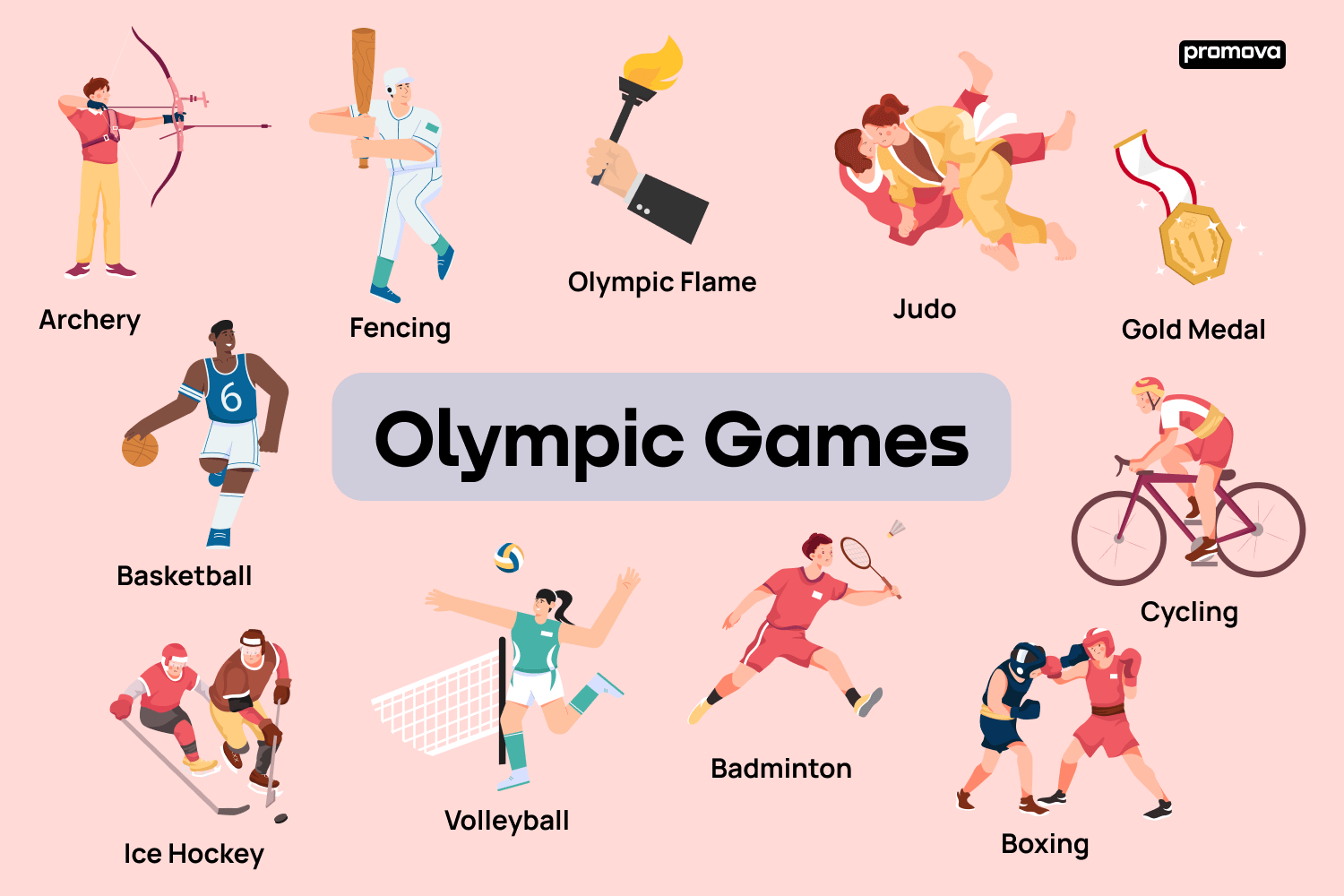
Definitions of Summer Olympic Games
The Summer Olympic Games, also known as the summer games, are held every four years and feature a diverse array of olympic sports, ranging from athletics and swimming to gymnastics and team events. Here is the list of sports and events related to the Summer Olympics:
- Athletics: Track and field events, including running, jumping, and throwing disciplines.
- Ceremonies: Opening and closing ceremonies that mark the beginning and end of the Olympics, showcasing the host nation's culture and tradition.
- Gold Medal: The highest accolade awarded to the winners of each event during the Olympics.
- Silver Medal: The award given to those who reach the second place of the competition.
- Bronze Medal: The award given to those who reach the third place of the competition.
- Gymnastics: A sport involving exercises to display strength, balance, and agility, which includes disciplines such as artistic gymnastics, rhythmic gymnastics, and trampoline.
- Olympic Flame: The symbolic flame that is lit at the beginning of the Olympics and burns throughout the duration of the Games.
- Records: Achievements made by athletes that surpass previous best performances in their respective sports.
- Swimming: A water-based sport with various styles such as freestyle, backstroke, breaststroke, and butterfly.
- Team Sports: Sports that require collective efforts, such as soccer, basketball, field hockey, and volleyball.
- Torch Relay: A ceremonial event where the Olympic flame is carried across different locations before the Games begin.
- Basketball: A team sport played on a court, aiming to score points by shooting the ball into the opposing team's hoop.
- Canoeing: A water sport involving paddling a canoe or kayak through different courses and distances.
- Doping: The use of prohibited substances or methods to enhance performance, strictly prohibited in the Olympic Games.
- Equestrian: Sports involving horseback riding, including dressage, show jumping, and eventing.
- Handball: A fast-paced team sport where players use their hands to pass and throw a ball into the opposing team's goal.
- Judo: A martial art and combat sport that emphasizes throws and grappling techniques to defeat opponents.
- Pentathlon: A multi-discipline event comprising five sports: fencing, swimming, equestrian show jumping, pistol shooting, and cross-country running.
- Sailing: The sport of using wind to propel sailboats or sailboards across the water, often involving different classes and races.
- Table Tennis: A racket sport played on a table, where players hit a lightweight ball back and forth over a net.
- Triathlon: An endurance event that combines swimming, cycling, and running in immediate succession.
- Archery: A sport that involves shooting arrows at a target using a bow.
- Cycling: A sport that involves racing on bicycles, including disciplines such as road cycling, track cycling, and mountain biking.
- Diving: A sport that involves performing acrobatic movements while diving into a pool from a platform or springboard.
- Rowing: A sport where teams or individuals propel a boat using oars.
- Soccer: A team sport played with a round ball, where players aim to score goals by kicking the ball into the opposing team's net.
- Tennis: A racket sport played on a court, where players use rackets to hit a ball over a net and into the opponent's court.
- Badminton: A racket sport played with a shuttlecock, where players hit it back and forth over a net.
- Boxing: A combat sport where two opponents throw punches at each other while following a set of rules.
- Fencing: A martial art and sport where competitors use bladed weapons to score points by touching their opponents.
- Golf: A precision club-and-ball sport played on a course, where players aim to hit the ball into a series of holes with the fewest strokes.
- Modern Pentathlon: An Olympic event comprising five sports: fencing, swimming, horse riding, pistol shooting, and cross-country running.
- Rugby Sevens: A variant of rugby union, played with seven players on each team, known for its fast-paced and dynamic nature.
- Synchronized Swimming: A combination of swimming, gymnastics, and dance, performed in unison by a team or duet.
- Taekwondo: A Korean martial art characterized by dynamic kicks, punches, and spinning movements.
- Volleyball: A team sport played with a ball, where players aim to hit it over a net and into the opposing team's court.
These Olympic competitions showcase the incredible diversity and excitement of the Summer Games.
Words for Winter Olympic Games
The Winter Olympic Games, also known as the winter games, occur every four years and showcase a variety of winter sports. Here is the list of sports and events associated with the Winter Olympics:
- Biathlon: A sport that combines cross-country skiing and rifle shooting.
- Curling: A team sport played on ice, where players slide stones towards a target while teammates sweep the ice to influence the stone's path.
- Figure Skating: A sport that involves jumps, spins, and choreographed movements performed on ice.
- Ice Hockey: A fast-paced team sport played on ice, where players use sticks to score goals by shooting a puck into the opposing team's net.
- Luge: A high-speed winter sport where athletes slide down an icy track on a sled.
- Ski Jumping: A sport in which skiers launch themselves off a ramp and compete for distance and style.
- Snowboarding: A winter sport that combines elements of surfing, skateboarding, and skiing, performed on a snowboard.
- Speed Skating: A racing sport where athletes compete on ice, aiming to achieve the fastest time over a set distance.
- Alpine Skiing: A sport that involves racing down snow-covered slopes, navigating through gates at high speeds.
- Bobsleigh: A winter sport where teams of two or four athletes race down a twisting ice track in a gravity-propelled sled.
- Cross-Country Skiing: A form of skiing that involves propelling oneself across snow-covered terrain, often in a race.
- Freestyle Skiing: A discipline of skiing that involves performing aerial tricks, moguls, or skiing in a terrain park.
- Ice Skating: The general term encompassing various disciplines such as figure skating, speed skating, and ice dancing.
- Nordic Combined: A combination of ski jumping and cross-country skiing, with scores from both events determining the winner.
- Short Track Speed Skating: A high-speed form of ice skating that takes place on a smaller track, often involving multiple skaters in close quarters.
- Skeleton: A solo winter sliding sport where athletes ride a small sled headfirst down an icy track.
- Ski Cross: A freestyle skiing event where multiple skiers race down a course with jumps, rollers, and banked turns.
The Winter Games highlight the skill and endurance required for cold-weather sports, adding another dimension to the Olympic tradition.
1
Olympic Games Basic Terminology
Understanding the specific terminology used in the Olympic Games is crucial to following the event. Here are some basic Olympic terms you should know:
Competition Terms
- Antidoping: Measures and procedures taken to prevent the use of performance-enhancing substances or methods in sports.
- Tiebreaker: A method used to determine a winner in case of a tie or draw in a match or event.
- Qualification: The process by which athletes or teams earn the right to participate in the Olympic Games through pre-determined criteria.
- World Record: The best performance ever achieved in a specific sport or discipline, recognized as the highest standard.
- Passing the Baton: A symbolic gesture in relay races where one runner hands over a baton to the next runner.
Ceremonies and Records
- Opening Ceremony: The grand event that marks the commencement of the Olympic Games, featuring various performances and the parade of nations. The Opening Ceremony is the official start of the Games, featuring the Parade of Nations and the lighting of the cauldron.
- Olympic Oath: The Olympic Oath emphasizes the importance of participation and sportsmanship over winning.
- Olympic Creed: The Olympic Creed emphasizes participation over victory, stating that the most important thing is to take part.
- Medal Table: A tabulated display of the number of medals won by each country during the Olympics.
- Podium: The raised platform on which medalists stand during the medal ceremony to receive their medals.
Athlete and Team Terms
- Flagbearer: The athlete who carries their country's flag during the opening ceremony, representing their nation.
- Paralympics: A parallel sporting event for athletes with disabilities, held after the Olympic Games.
- Youth Olympics: A sporting event held for athletes between the ages of 15 and 18 to promote the Olympic values and youth engagement.
- Underdog: A participant or team not expected to win but has the potential to cause an upset against stronger opponents.
Organization and Structure
- Olympic Charter: The document that outlines the fundamental principles, rules, and structure of the Olympic Movement.
- Pictograms: Graphic symbols used to represent different sports in the Olympics, making it easier to identify them.
- Sports Federation: An international organization responsible for governing and overseeing a specific sport at the global level.
- Technical Officials: Trained individuals who ensure that competitions are conducted fairly, following the rules and regulations of each sport.
- Venue Overlay: The temporary infrastructure and modifications made to existing facilities to accommodate Olympic events.
- World Anti-Doping Code: A document that harmonizes anti-doping policies, rules, and regulations across all sports and countries.
- Olympic Village: The residential area where athletes and team officials stay during the duration of the Games.
With these terms, you’ll be able to follow Olympic coverage and discussions with greater confidence.
Definitions of Olympic Venues and Facilities
The Olympic Games take place in different cities around the world, each hosting a variety of events in various venues and facilities. Here is the list of Olympic words related to venues and facilities:
Aquatic Venues
- Aquatics Center: A facility equipped with pools for swimming and diving events.
- Synchronized Swimming Pool: A pool designed specifically for synchronized swimming events, featuring varying depths and underwater speakers.
Indoor Sports Venues
- Gymnasium: A venue equipped with exercise equipment and facilities for indoor sports.
- Sports Hall: A multipurpose indoor facility used for various sports, such as basketball, volleyball, and handball.
- Fencing Hall: A dedicated facility with fencing strips and equipment for competitions and training.
- Weightlifting Arena: A venue specifically designed for weightlifting competitions.
- Wrestling Arena: A space equipped for wrestling events, featuring a mat and seating for spectators.
- Velodrome: An indoor cycling track used for track cycling events.
- Track Cycling Velodrome: An indoor cycling track with steeply banked turns, designed specifically for track cycling events.
- Volleyball Court: A designated area for playing volleyball, featuring a net and boundary lines.
Outdoor Sports Venues
- Olympic Park: A designated area that houses various venues and infrastructure for the Olympics.
- Stadium: A large structure designed to accommodate thousands of spectators, serving as a major sports facility with tiered seating. The Olympic stadium, in particular, is the main venue for major events like the opening and closing ceremonies, as well as for track and field and soccer.
- Athletes’ Village: Accommodation provided for participating athletes during the Games.
- Youth Training Center: A facility where athletes can train and prepare for their respective events, often equipped with state-of-the-art equipment and expert coaching staff.
- BMX Track: A specially designed track for BMX (Bicycle Motocross) racing, featuring jumps, banked turns, and obstacles.
- Equestrian Center: A venue equipped for equestrian events, including dressage, show jumping, and eventing.
- Hockey Field: A field specifically designed for field hockey matches, featuring a turf surface and boundary lines.
- Mountain Bike Course: A trail system designed for mountain bike competitions, incorporating challenging terrain and obstacles.
- Shooting Range: A controlled environment where shooting events take place, with designated areas for different firearm disciplines.
- Tennis Court: A specially prepared surface for tennis matches, often made of grass, clay, or hard materials.
These venues provide the stage for athletes to compete and for fans to experience the excitement of the Games.
Names of Olympic Symbols and Flags
Symbols and flags play a significant role in representing the Olympic Games and the participating nations. Here are some common words and terms related to Olympic symbols and flags:
- Five Rings: The Olympic rings consist of five interlocking rings, coloured blue, yellow, black, green, and red on a white field. The five rings on the Olympic flag represent the inhabited continents of the world.
- Motto: The original Olympic motto is "Citius, Altius, Fortius" which is Latin for "Faster, Higher, Stronger". The Olympic motto was introduced at the 1924 Summer Olympics in Paris.
- Olympic Flag: The Olympic flag was created in 1914 under the guidance of Baron de Coubertin of France.
- National Flag: The flag representing each participating nation during the Olympic Games.
- Olympic Anthem: The Olympic anthem is played when the Olympic flag is raised, and it was composed by Spyridon Samaras with words from a poem by Kostis Palamas.
- Opening Ceremony Flag Parade: The procession of athletes carrying their national flags during the opening ceremony, showcasing the diversity of nations.
- Torch: The symbol of the Olympic Flame, which different athletes carry during the torch relay leading up to the Games.
- Medal Design: The design of the medals awarded to athletes, featuring unique elements specific to each host city or edition of the Olympics.
- Paralympic Symbol: The symbol representing the Paralympic Games, consisting of three agitos in different colors, representing diversity and inclusion.
- Host City Emblem: The emblem or logo designed specifically for the host city, representing its culture, heritage, and unique identity.
These symbols and flags are powerful representations of unity, competition, and international friendship.
Vocabulary for Olympic Values and Ideals
The Olympic Games embody several core values and ideals that promote sportsmanship, fair play, and international understanding. Here are some common words and terms related to Olympic values and ideals:
Core Values
- Fair Play: The concept of playing within the rules, respecting opponents, and displaying sportsmanship.
- Friendship: Fostering friendly relations among athletes and promoting understanding between nations through sport.
- Equality: Ensuring equal opportunities and fair treatment for all athletes, regardless of their background or characteristics.
- Respect: Showing respect for opponents, officials, and the spirit of the game, promoting a culture of mutual respect.
- Solidarity: The spirit of unity and support among athletes, nations, and the Olympic Movement as a whole.
- Excellence: Pursuing the highest standards of performance and continuously striving for improvement.
- Diversity: Embracing and celebrating the diverse backgrounds, cultures, and abilities of athletes and participants.
Legacy and Inspiration
- Inspiration: Motivating individuals to strive for their best and inspiring others through exemplary performances.
- Legacy: The long-term impact of the Olympics on the host city, region, and sporting community, leaving a positive and lasting heritage.
- Sportsmanship: Conducting oneself with integrity, respect, and fairness, both on and off the field of play.
These values are at the heart of the Olympic Movement and inspire athletes and fans alike.
Olympic Organizations and Committees
The Olympic Games are organized and governed by various organizations and committees that ensure the smooth execution of the event. Here are ten words and terms related to Olympic organizations and committees:
- International Olympic Committee (IOC): The supreme authority responsible for overseeing the Olympic Movement and organizing the Olympic Games.
- National Olympic Committee (NOC): The organization representing each participating country; responsible for coordinating their national Olympic teams.
- International Paralympic Committee (IPC): The governing body for the Paralympic Games, responsible for organizing and promoting the event for athletes with disabilities.
- Organizing Committee: The committee formed by the host city to plan and manage all aspects of the Olympic Games, including logistics, venues, and operations.
- Executive Board: The governing body within the IOC; responsible for making key decisions and policies related to the Olympic Games.
- National Governing Bodies (NGBs): Organizations within each country responsible for the development and administration of specific sports at the national level.
- Court of Arbitration for Sport (CAS): An independent judicial body that resolves disputes related to sports, including issues that may arise during the Olympic Games.
- World Anti-Doping Agency (WADA): An organization dedicated to promoting, coordinating, and monitoring the fight against doping in sports, including Olympic events.
- Olympic Solidarity: A program initiated by the IOC to support athletes, NOCs, and the development of sports worldwide, particularly in less privileged regions.
- World Olympians Association (WOA): An organization that represents and serves the interests of Olympians worldwide, promoting their well-being and engagement in society.
These organizations ensure the Olympic Games are fair, inclusive, and successful.
Summary
This guide provides a comprehensive list of Olympics words and terms, helping you understand the language of the Olympic Games, from sports and events to symbols, values, and organizations. Whether you are an English learner, a sports fan, or simply curious about Olympic culture, understanding olympics words will help you follow the Games, improve your English, and appreciate the global spirit of the Olympics.


Comments