Mastering Infinitives in Spanish: How to Use “-Ar,” “-Er,” and “-Ir” Verbs
Contents

Key takeaways:
- Spanish verbs in the infinitive form end with either “-ar,” “-er,” or “-ir.”
- Infinitives in Spanish are used differently from English infinitives. In English, we often use the “-ing” form, where Spanish speakers use the infinitive.
- Spanish infinitives can be used to form commands, as subjects in a sentence, after a preposition, or after a conjugated verb.
One of the trickiest parts of learning another language is that the grammar doesn’t always correspond to English. This is the case when it comes to infinitive verbs in Spanish grammar. They work completely differently from infinitives in English. But don’t let that put you off! Spanish infinitives are actually easier than they may seem, especially with some proper guidance.
In this article, we’re going to dive into Spanish infinitive verbs, how they work, how to use them, and how to master them to become more fluent.
What is an infinitive in Spanish?
El infinitivo, or the infinitive in Spanish, is the most basic form of a verb. The infinitive is not conjugated; it doesn’t have a person, a tense, or anything like that. It’s the verb in its most neutral form.
In English, the infinitive is usually accompanied by the word “to.” An example of an English infinitive would be “to go” or “to sing.” However, this is not what the Spanish infinitive looks like. Adding a preposition in front of an infinitive in Spanish is a common mistake that Spanish learners often make.
In Spanish, the infinitive is formed by adding “-ar,” “-er,” or “-ir” at the end of the word, right after the word stem. For example:
- Ayud + -ar = ayudar (to help)
- Respond + -er = responder (to answer)
- Dorm + -ir = dormir (to sleep)
But how do you know which ending to use in the Spanish infinitive? The truth is that you’ll have to memorize each verb you come across. But don’t worry! To get you started, we’ve prepared a list of 20 of the most common verbs for each ending (“-ar,” “-er,” and “-ir”).
-Ar verbs
Many of the verbs you’ll come across in your day-to-day life will be “-ar” verbs, which seem to be more common than the two other groups.
Here’s a list of 20 of them to get you started:
| Spanish verb | English translation |
| Ayudar | To help |
| Buscar | To look for / to search |
| Cambiar | To change |
| Dejar | To leave / to let |
| Empezar | To begin / to start |
| Entrar | To enter / to go in |
| Esperar | To wait / to hope |
| Estudiar | To study |
| Hablar | To speak |
| Llegar | To arrive |
| Llevar | To carry / to wear |
| Llamar | To call |
| Mirar | To watch / to look at |
| Necesitar | To need |
| Pasar | To pass / to spend time |
| Pensar | To think |
| Terminar | To finish / to end |
| Tomar | To take / to drink |
| Trabajar | To work |
| Usar | To use |
If you’d like to learn even more Spanish “-ar” verbs, check out this useful video:
1
-Er verbs
Next, let’s take a look at some of the most useful “-er” words you should know:
| Spanish verb | English translation |
| Aprender | To learn |
| Beber | To drink |
| Comer | To eat |
| Comprender | To understand |
| Conocer | To know / to be familiar with |
| Correr | To run |
| Creer | To believe |
| Deber | To owe / should / must |
| Entender | To understand / to grasp |
| Hacer | To do / to make |
| Leer | To read |
| Meter | To put / to insert |
| Perder | To lose |
| Poner | To put / to place |
| Poder | To be able to / can |
| Prometer | To promise |
| Responder | To answer / to respond |
| Romper | To break |
| Ser | To be |
| Vender | To sell |
Check out this helpful video to learn more Spanish verbs ending in “-er”:
-Ir verbs
Last but not least, we have a list of 20 Spanish infinitives that have the “-ir” ending. These are:
| Spanish verb | English translation |
| Abrir | To open |
| Compartir | To share |
| Convertir | To convert / to turn into |
| Decidir | To decide |
| Descubrir | To discover |
| Dormir | To sleep |
| Escribir | To write |
| Morir | To die |
| Oír | To hear |
| Pedir | To ask for |
| Permitir | To allow / to permit |
| Preferir | To prefer |
| Recibir | To receive |
| Reír | To laugh |
| Salir | To leave / to go out |
| Seguir | To follow / to continue |
| Sentir | To feel |
| Servir | To serve |
| Subir | To go up / to climb / to upload |
| Vivir | To live |
Watch this video and find out more about “-ir” verbs in Spanish:
How to use infinitive verbs in Spanish?
| When to use infinitive verbs in Spanish | |
1. As a subject of a sentence.
For example: Estudiar español es divertido. (Studying Spanish is fun.) | 2. After a preposition.
For example: Gracias por venir. (Thanks for coming.) |
3. After a conjugated verb (incl. modal verbs).
For example: Quiero comer algo. (I want to eat something.) | 4. As a command or instruction.
For example: No fumar. (No smoking.) |
Much like in English, the infinitive in Spanish is used in several different ways. You can use it in many different grammatical constructions to get across your meaning. Today, we’re going to look at the most important ones that you should be aware of.
1. Spanish infinitive as a subject of a sentence
In Spanish, the infinitive can sometimes function as the subject of a sentence (i.e., the thing that is performing the action of the main verb of the sentence). For example:
- Comer verduras es saludable. (Eating vegetables is healthy.)
- Viajar abre la mente. (Traveling opens the mind.)
- Estudiar español es divertido. (Studying Spanish is fun.)
- Bailar me hace feliz. (Dancing makes me happy.)
- Leer es una buena manera de aprender. (Reading is a good way to learn.)
Note: In English, the gerund (or “-ing” form) is used in a similar way to infinitive verbs in Spanish. It’s important not to get these two confused, though. Spanish does not use the gerund here. Only the infinitive form is correct.
2. Infinitives in Spanish after a preposition
If you need to use a verb after a preposition in Spanish, don’t forget to put the verb in the infinitive form. That’s what always happens in Spanish. If there’s a preposition, the infinitive must follow.
Here are some example sentences:
- Antes de salir, tengo que llamar a mi madre. (Before leaving, I have to call my mother.)
- Gracias por venir. (Thanks for coming.)
- Voy a estudiar esta noche. (I’m going to study tonight.)
- Sin decir una palabra, se fue. (Without saying a word, he left.)
- En lugar de trabajar, está durmiendo. (Instead of working, he’s sleeping.)
Much like with the previous case, in English, we’d mostly use the gerund form after a preposition (though the infinitive can sometimes be used, too). In Spanish, however, the gerund form is not used here. Instead, remember to always use the infinitive.
3. Spanish infinitives after a conjugated verb
Sometimes, Spanish speakers also use the infinitive after another conjugated verb. This can happen in several cases, for example:
- After a modal verb:
- Puedo hablar español. (I can speak Spanish.)
- After a verb of desire or intention:
- Quiero comer algo. (I want to eat something.)
- After a verb of necessity:
- Necesito dormir más. (I need to sleep more.)
- After a verb of perception:
- Escuché cantar a los niños. (I heard the children sing.)
- After expressions with “tener que” (obligation):
- Tengo que estudiar esta tarde. (I have to study this afternoon.)
4. Infinitive in Spanish as a command
Last but not least, the Spanish infinitive can also be used as commands or instructions. You’ll often see this on informational or warning signs, posters, and sometimes even recipe books.
Here are some example sentences to show you how it’s used:
- No fumar. (No smoking.)
- No tocar. (Do not touch.)
- Empujar para abrir. (Push to open.)
- Lavar antes de usar. (Wash before using.)
- No correr en los pasillos. (Do not run in the hallways.)
Tip: If you’re trying to tell someone not to do something, you can simply put the word “no” before an infinitive to create a negative command.
Tips for mastering infinitives in Spanish
After reading this guide, you may be asking yourself: How am I going to learn all these rules? It may seem a little overwhelming at first, but don’t worry. With these simple tips, you’ll master this part of the Spanish grammar in no time:
- Pay attention to verb endings: If you’re unsure if a verb is in the infinitive form, look at the ending of the verb. If it’s in the infinitive, it will end with either “-ar,” “-er,” or “-ir.”
- Look out for prepositions: If you need to use a preposition in front of a verb, remember that the infinitive form should always follow.
- Listen and read in Spanish: Sometimes, learning requires immersion. It’s the best way to make sure that the language will come to you naturally. We’d recommend watching Spanish TV shows, listening to podcasts, or reading online articles.
- Practice, practice, practice: Practice makes perfect. Don’t be afraid to go out there and speak Spanish with anyone and everyone available. Even if you make a mistake, you’re still working on your skills, and that’s how you’ll get better.
Test your Spanish level and master grammar with Promova
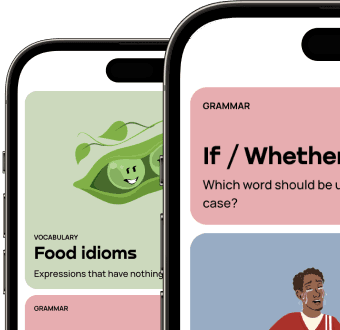
Now that you know more about the infinitive form in Spanish, it’s time to learn even more about this wonderful language. If you’re interested in improving your Spanish skills, try Promova.
Here’s what you’ll get with Promova:
- Bite-sized lessons: Learn Spanish by staying consistent and completing short, digestible lessons whenever you have the time.
- Progress tracking: Stay motivated by tracking how much you’ve achieved already.
- AI learning tools: Get instant feedback and practice your pronunciation with Promova’s AI Speaking feature.
- Test your language level: Unsure about what your Spanish level is? Take an online test for free to find out.
Try Promova today and get one step closer to Spanish fluency!
Final thoughts
The use of Spanish infinitives may differ from how we use the infinitive form in English, but that doesn’t mean it’s impossible to learn. In fact, Spanish actually has pretty clear rules that you can follow to master the infinitive. So get learning!
FAQ
What are examples of infinitive verbs in Spanish?
Some examples of infinitive verbs in Spanish include “ayudar,” “hablar,” “comer,” “ser,” “dormir,” and “seguir.” Spanish infinitives always end with one of the following suffixes: “-ar,” “-er,” and “-ir.” They can be used in many different ways in Spanish, including after prepositions or to make commands or give instructions.
How many types of infinitives are there in Spanish?
There are three types of infinitives in Spanish. The types differ in how each of them ends. The options are: “-ar” verbs that end with “-ar,” “-er” verbs ending with “-er,” and “-ir” verbs, which end with “-ir.”
When to use infinitives in Spanish?
The infinitive in Spanish can be used in many different ways. For example, it’s often used on signs to make commands or give people instructions. It’s also used after prepositions, after a conjugated verb, or it can also function as the subject of a sentence.
How can I learn Spanish with Promova?
You can learn Spanish with Promova by downloading the Promova app and picking Spanish as your language of choice. The app is great for learners of all levels, whether you’re a beginner or a more advanced Spanish speaker. If you’re not sure what your Spanish language level is, you can also try the free Spanish level online test.
Comments